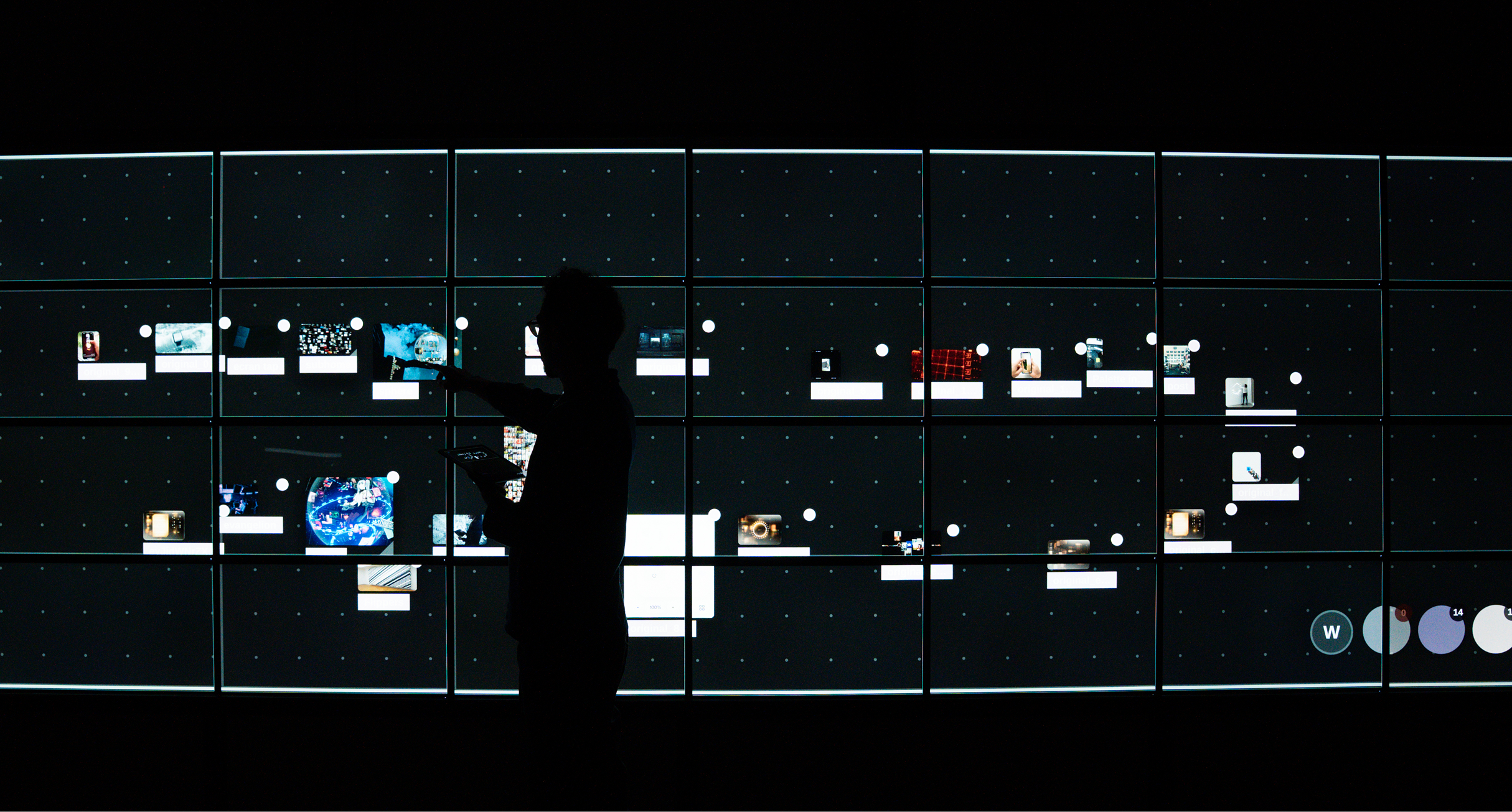


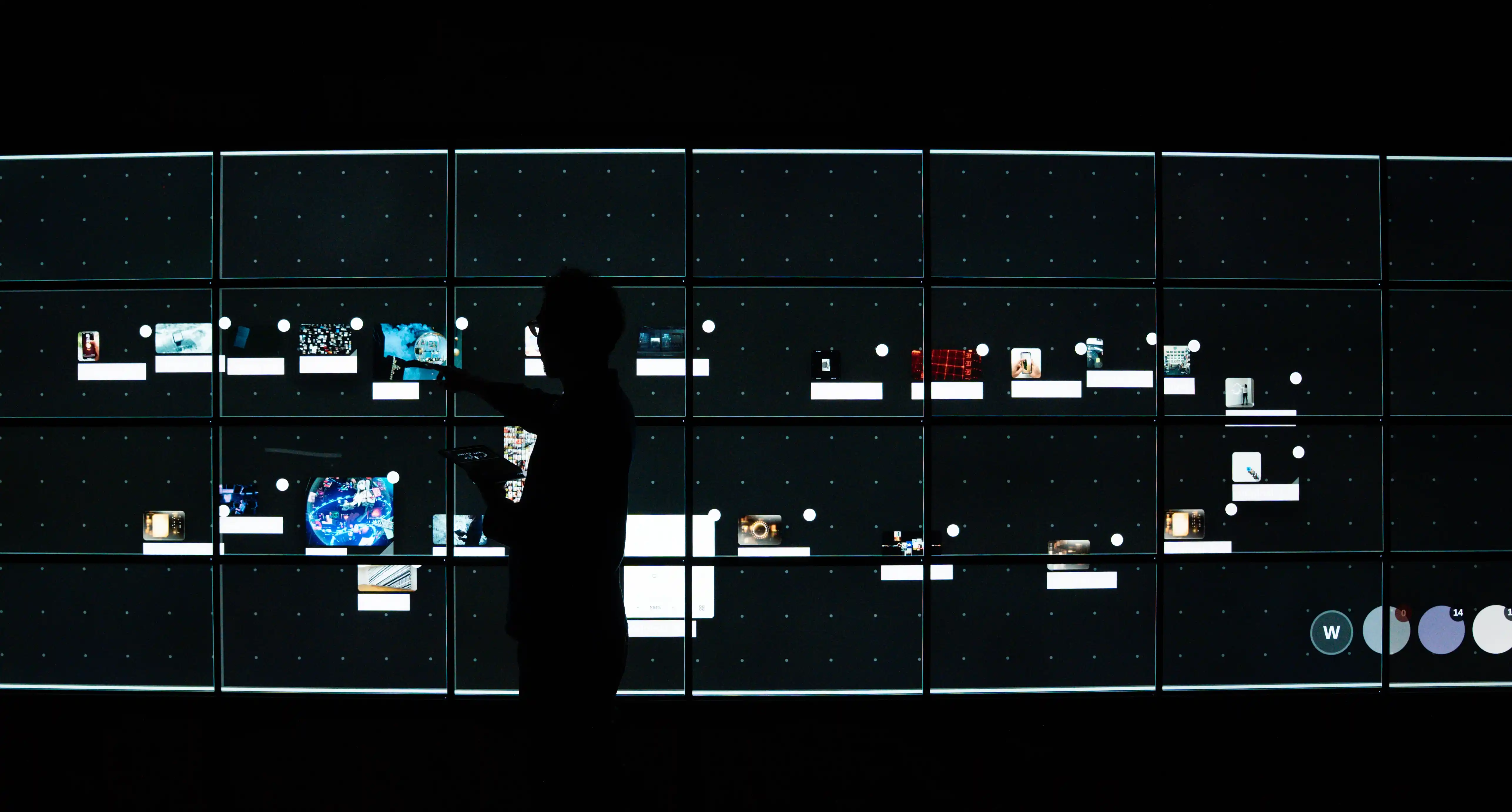
I worked with the LISN, a research laboratory specializing in Human-Computer Interaction (HCI), to explore the potential of its high technologies through design. My work focused on WILD, a 16-screen wall display with one billion pixels, designed for large-scale, embodied data exploration.
.webp)
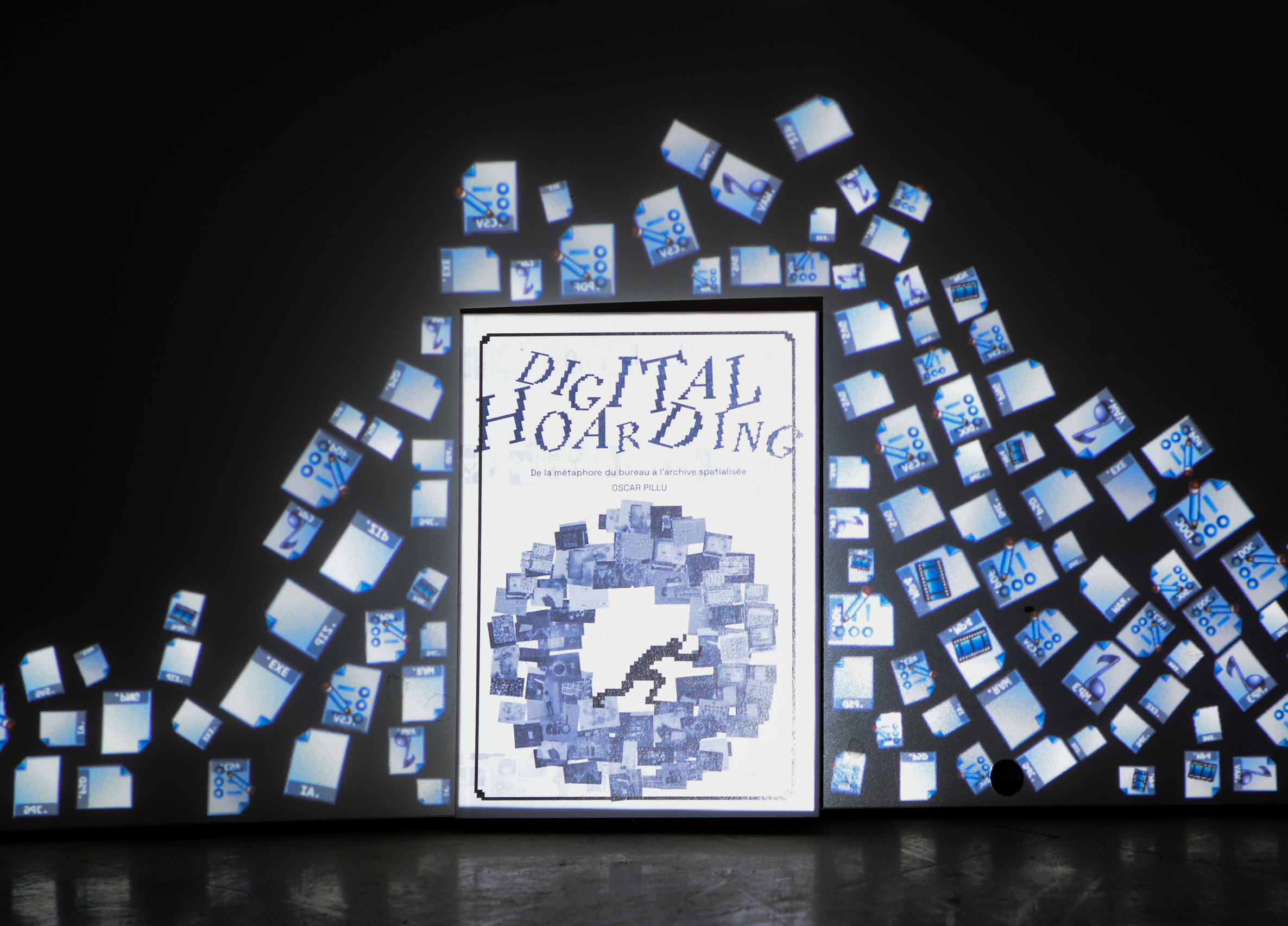
Over a year and a half, I explored WILD’s potential in addressing digital hoarding. How can we overcome the spatial limitations of our computers? By leveraging the scale of the wall, this project rethinks how we organize and manipulate digital resources through a spatial and embodied approach.
Researchers, designers, and digital hoarders seek to spatialize their digital resources. My investigations revealed that tools such as Miro and FigJam are often repurposed as storage spaces and knowledge management tools.
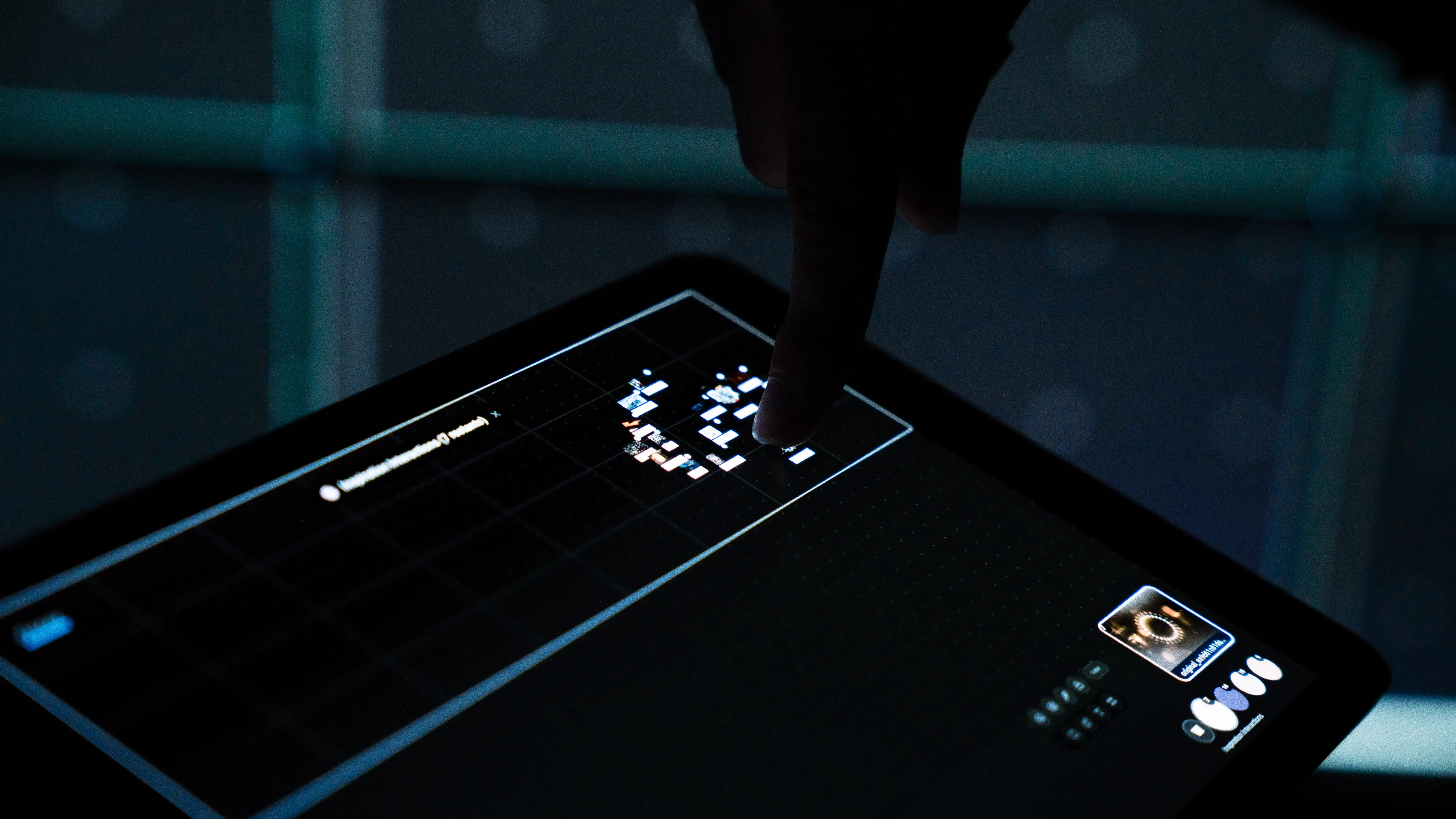
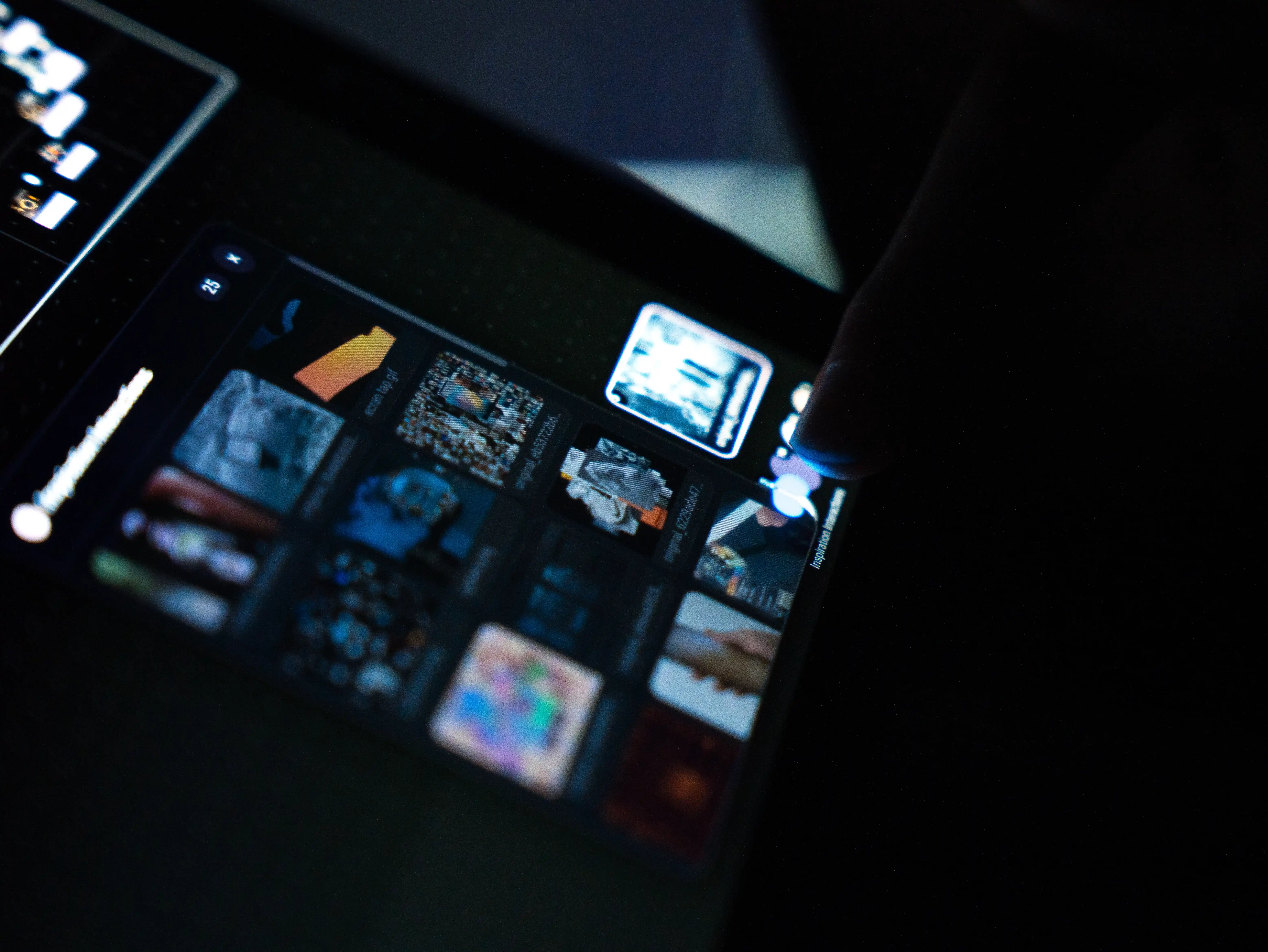
Is the desktop metaphor still enough? Could WILD introduce a new metaphor: a knowledge canvas where resources can be organized, manipulated, and connected at scale, turning this activity into a creative and aesthetic experience?
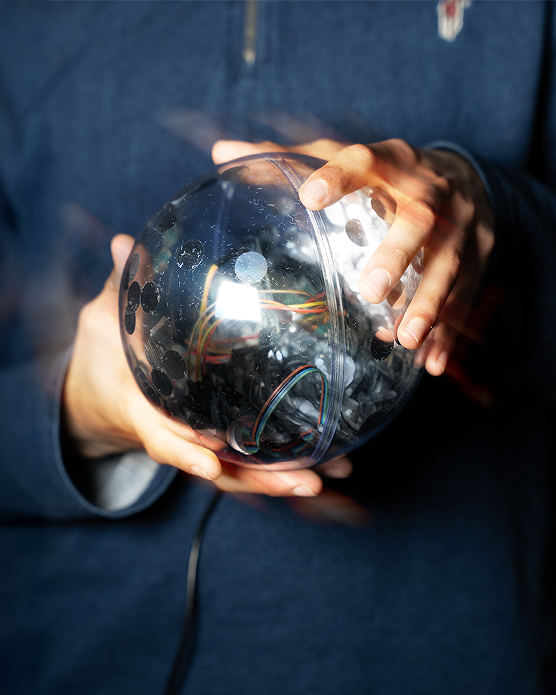
During a thematic analysis on digital hoarding, I noticed that people accumulate files that struck them in the moment. More surprising still: some return to visit their collection and feel a sense of satisfaction just from looking at it. I wanted to explore these effects through a small device, the Reminiscence Sphere.
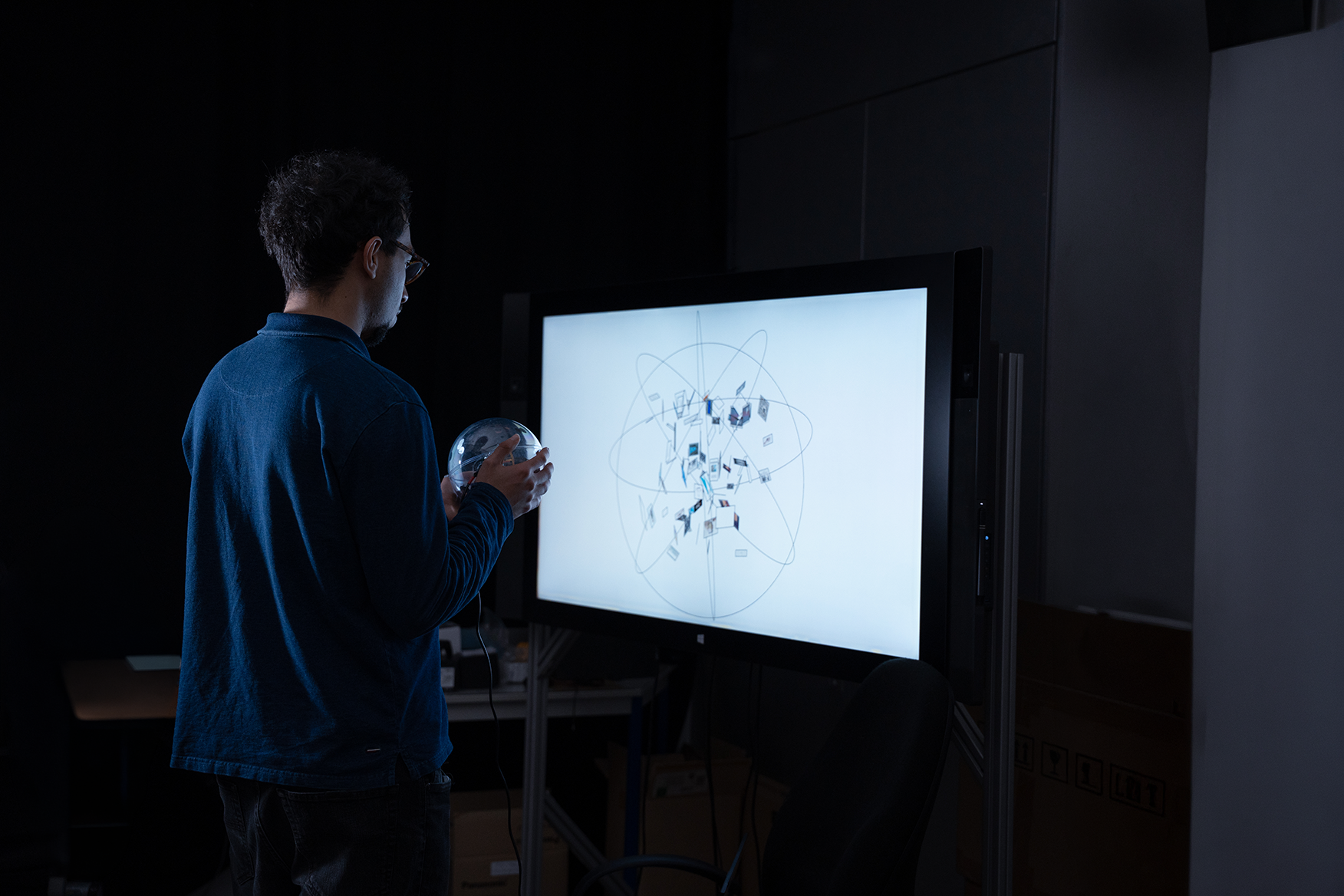
It's a sphere where your files live, navigated by manipulating a ball inside it. You shake it to land on a file you've forgotten or never opened, rediscovering the pleasure of finding things by chance. The device puts serendipity into play: when users showed me their accumulated resources, they expressed real joy, the joy of stumbling by accident onto something they'd lost sight of.
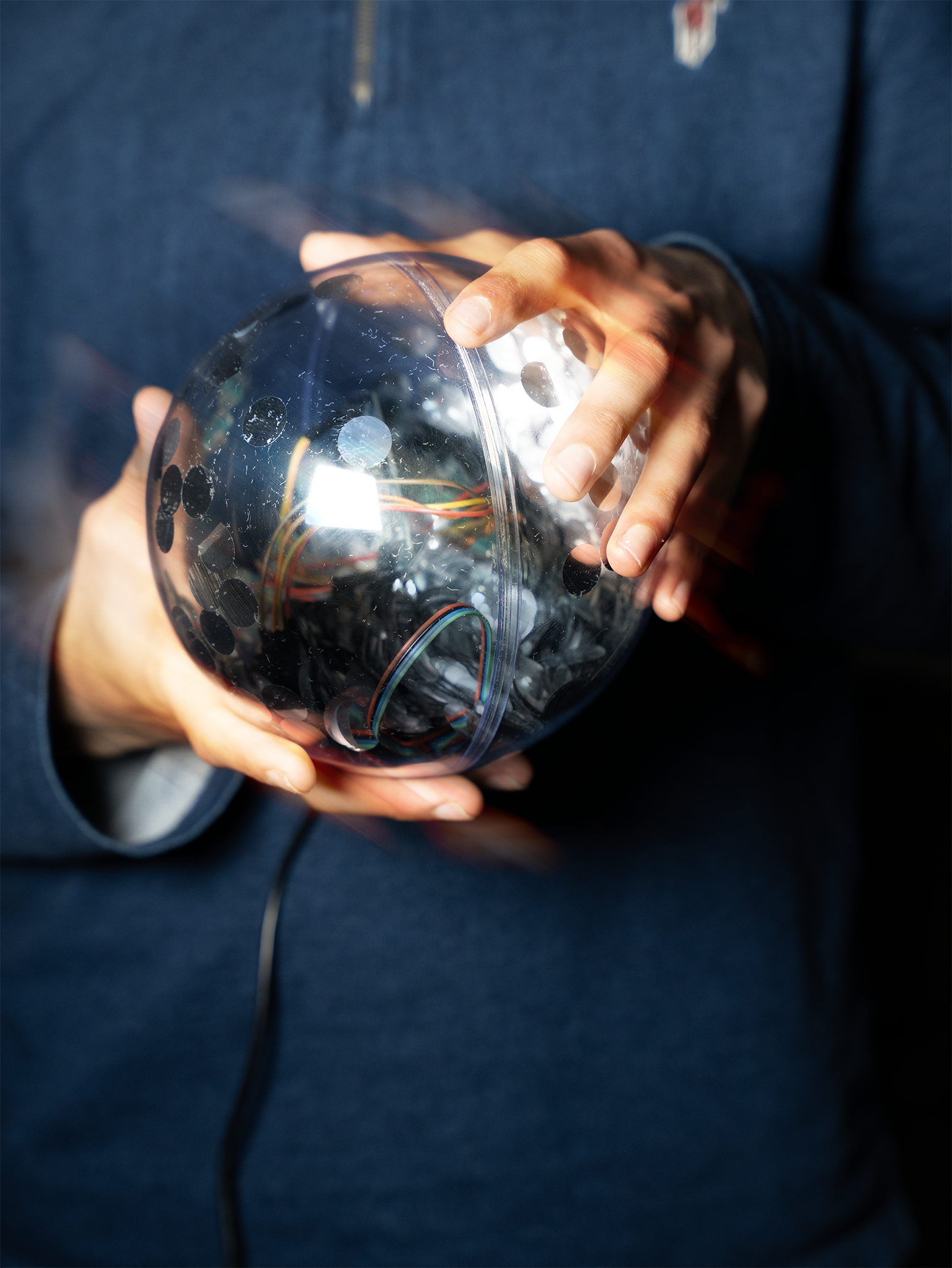
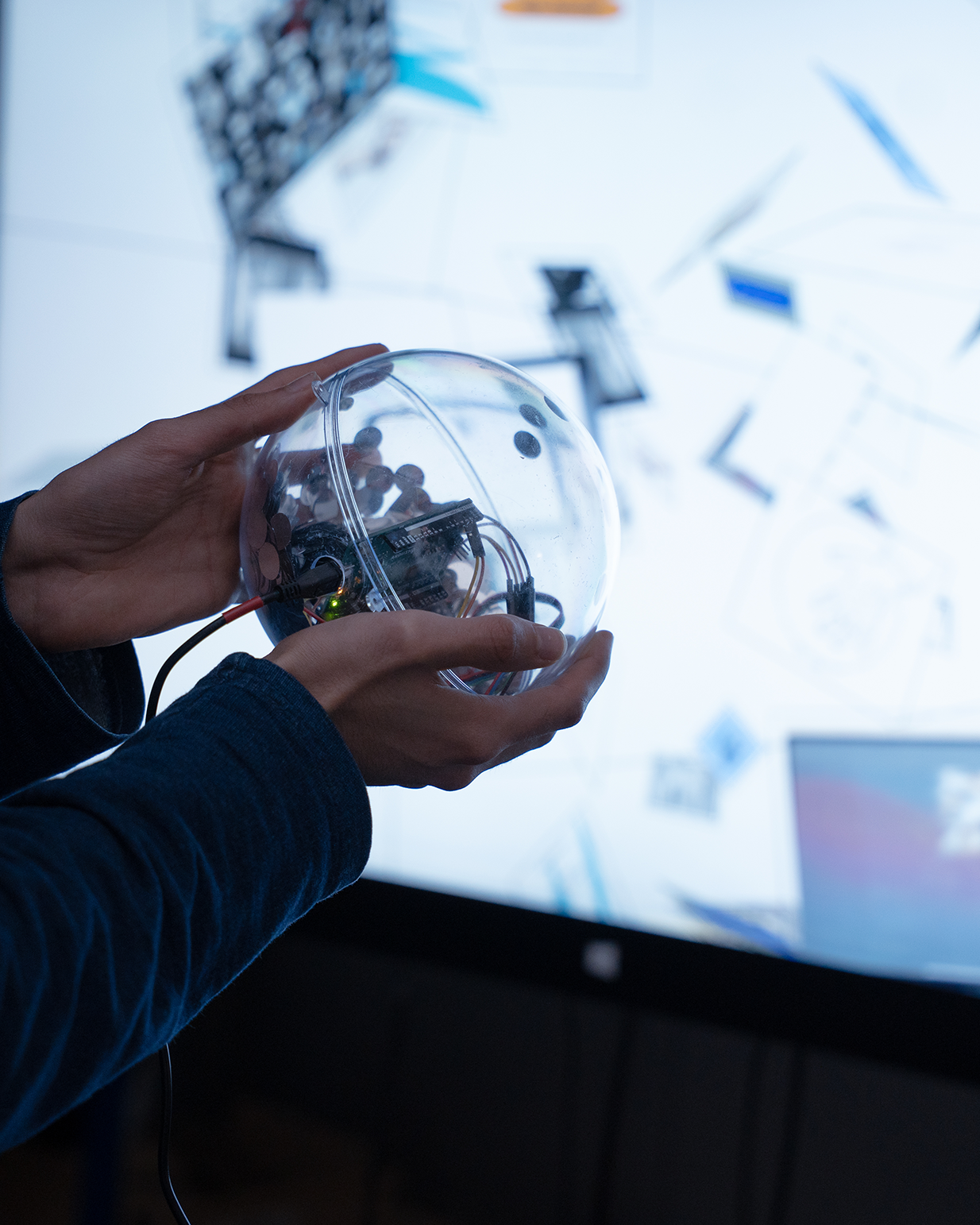
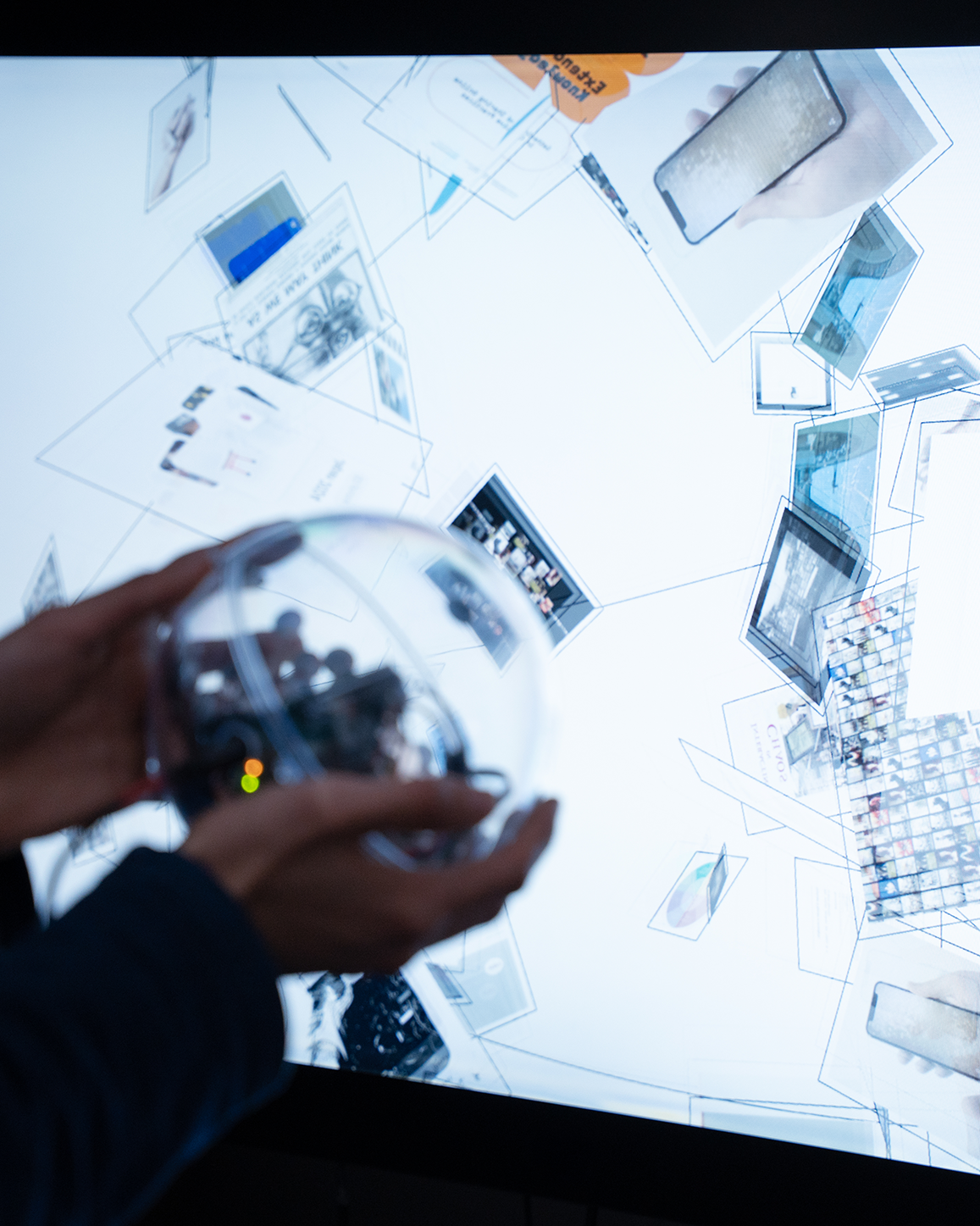
Testing confirmed the intuition. The verbatims describe a playful experience, judged more enjoyable than a conventional search: here, you can come across something you couldn't even name. You repeat a gesture until you find something satisfying, which activates the reward circuit.
What if we designed our own storage space?
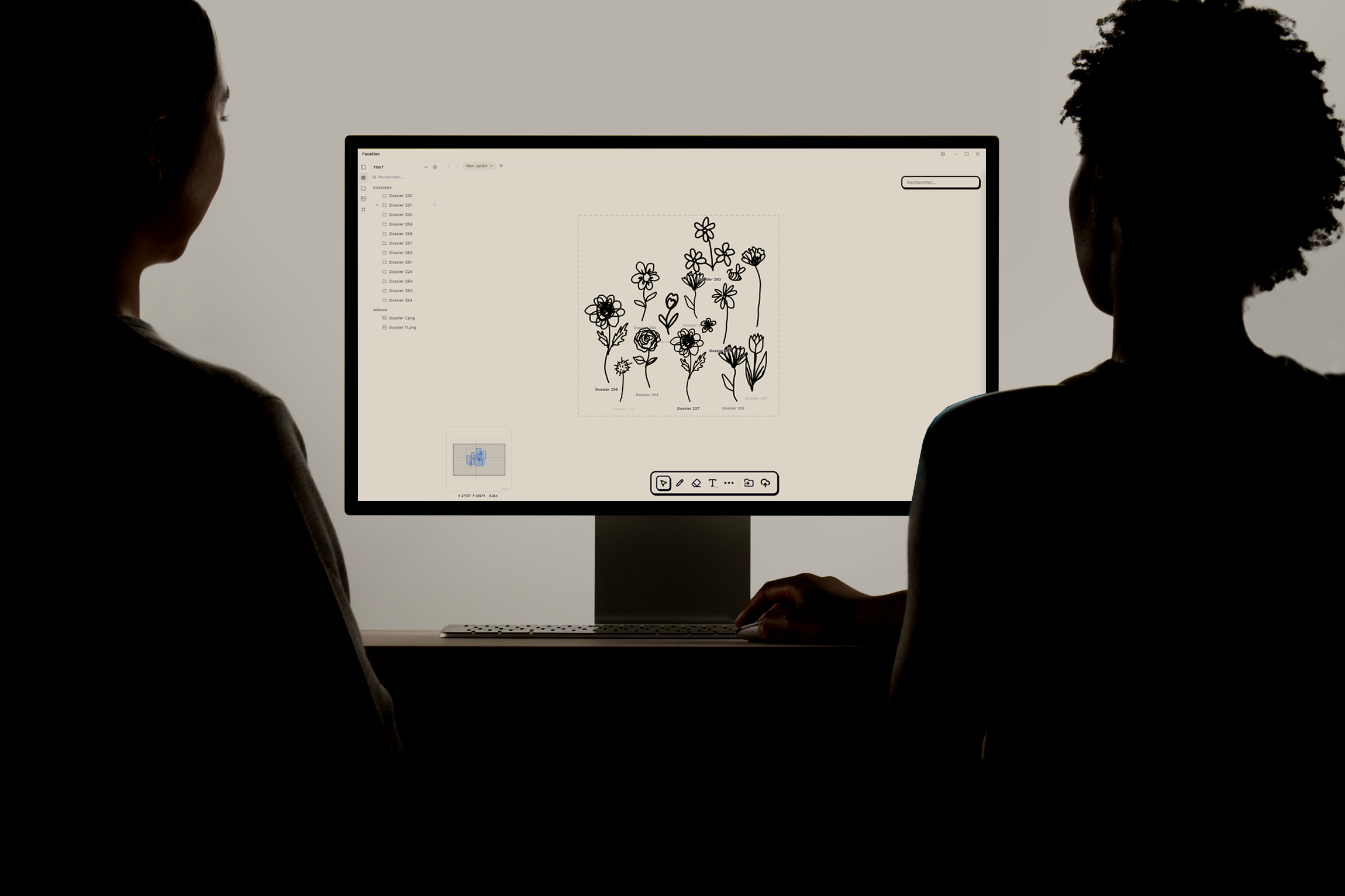
Faustian is a knowledge management tool designed to resolve the visual digital hoarding experienced by researchers and designers overwhelmed by files curation. Breaking away from the rigidity of Notion or Obsidian, Faustian offers an infinite canvas in the style of Figma or Miro where the experience relies on freedom: drawing your own folders. A heart for your favorite files, a timeline for visual classification, or the face of your favorite author to group their PDF books together, anything is possible.
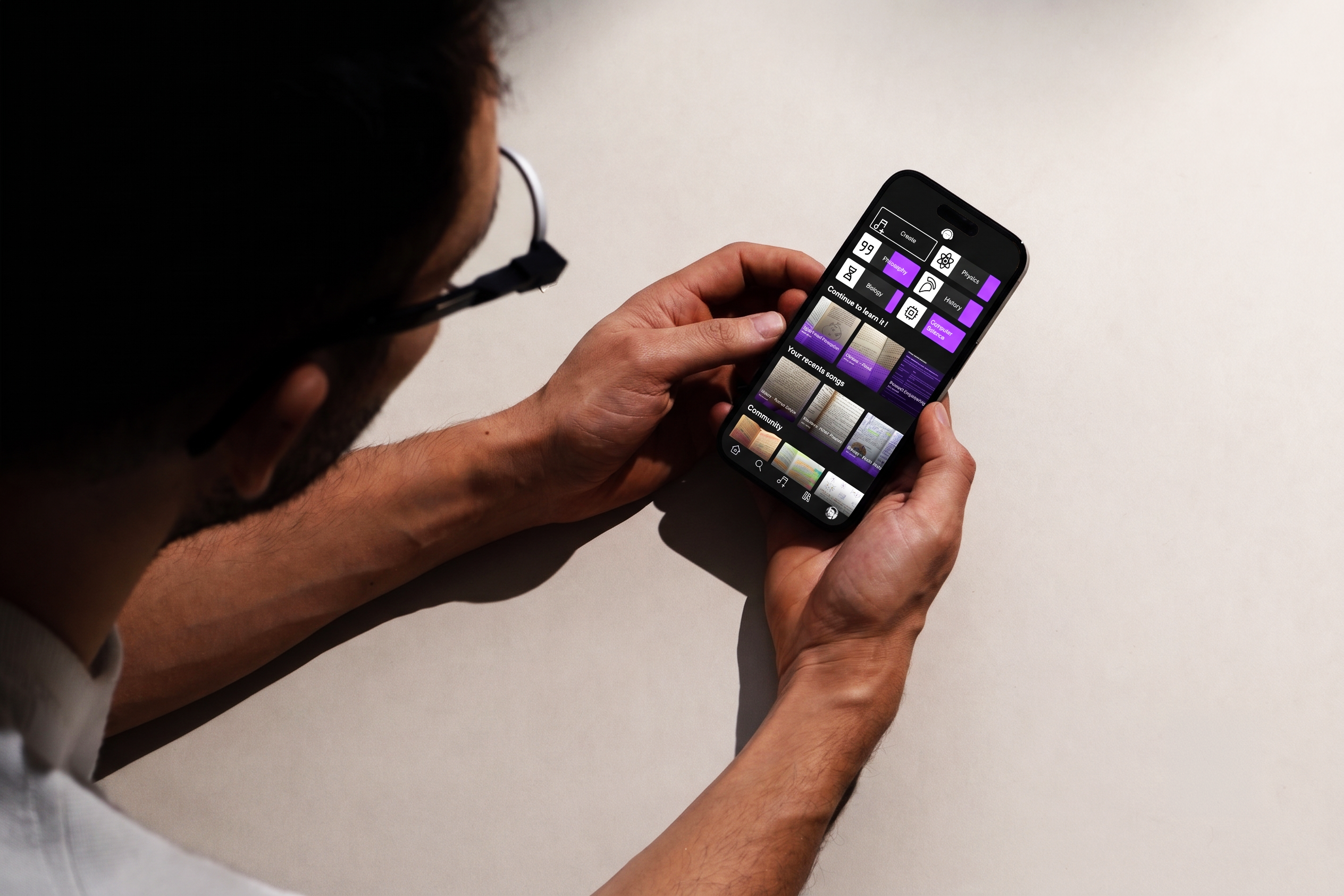
Studyo is a concept for turning photos of textbook pages into catchy songs, GPT-4 vision reads the page and writes lyrics, Udio composes the music, so students can memorise hard topics by singing along. In collaboration with Andreas Refsgaard, a creative coder, artist, and lecturer specialising in artificial intelligence, we designed a "fictitious prototype" in response to the emergence of Suno and Udio, AI systems capable of generating music. Studyo turns a lesson, a physics or maths course, or even a simple multiplication table into a song to memorise.
However, Studyo remains a concept, since none of the AI music generators (Udio, Suno, etc.) offered a public API when it was built. If that changes, it could become a real product.
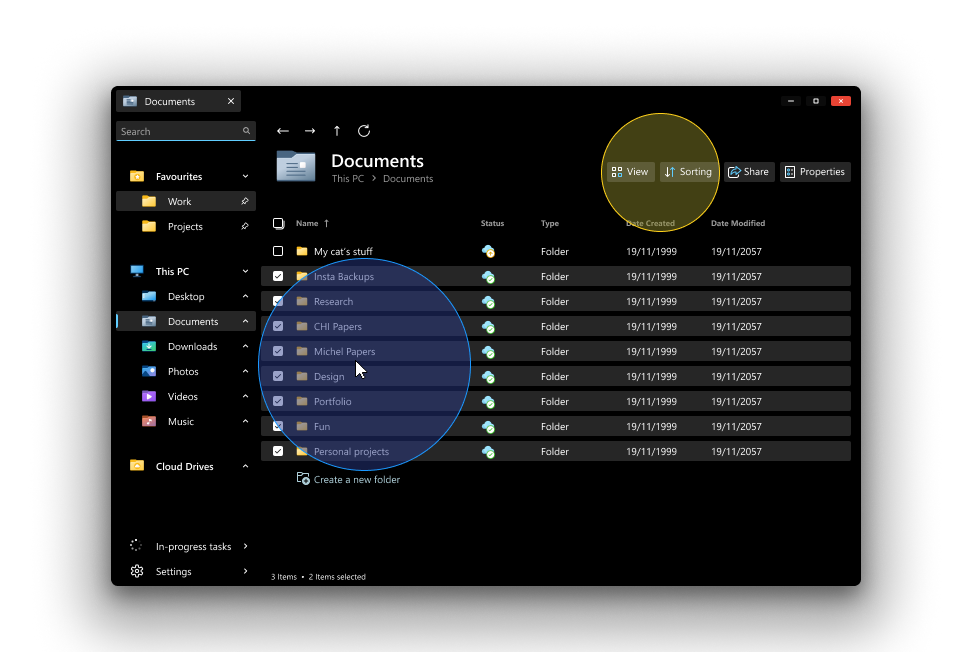
Point-and-click interaction remains central to graphical interfaces, but it becomes inefficient when tasks require the repeated activation of adjacent controls (for example, several checkboxes). We introduce CursorField, a technique enabling controlled multi-selection in a single action. While hovering, the user scrolls the mouse wheel to deploy a radial selection field centred on the cursor; nearby controls are progressively included and highlighted, then confirmed with a single click.
A comparative study against standard clicking shows that CursorField increases the number of activated targets with a similar number of clicks, thereby improving overall accuracy. On the other hand, this technique leads to longer reaction times and slower movement speed. Qualitative feedback highlights ergonomic issues (fatigue related to the combined wheel + click usage) as well as a potentially counterintuitive scroll direction, suggesting avenues for improvement to increase comfort and performance.
Lorebait emerges as a critical response to the attention economy that saturates my YouTube feed.
Faced with the sensationalist promises of clickbait* thumbnails, I developed, in collaboration with the Sciences Po médialab, a plugin that subverts recommendation mechanics: it replaces thumbnails, titles, and channel names, thereby reinventing the relationship to the serendipity of recommendation algorithms.
The new thumbnails are generated from my own usage traces, captured via the Loreselfie plugin from the Sciences Po Medialab. Thanks to Baitlore's combinatorial graphic language, I can now anticipate my post-viewing affects, negotiate my perception, adjust my behaviour, or simply choose the right moment, the right context for a given video.
*clickbait: content designed to attract attention and entice users to click on a link or a video, notably through exaggerated titles or images.
Lorefocus is a plugin that grafts onto my YouTube feed like a second skin. When I activate focus mode, it analyses the types of videos I spend time on, the ones that make me laugh and entertain me, the cause and triggers of my procrastination.
These videos are then made inaccessible to my mouse, which glides around their thumbnails without ever being able to select them. Instead, it is magnetically drawn towards academic and intellectual content, encouraging me to focus on more enriching videos.
As part of a workshop at the Sciences Po Medialab, I designed a series of interactions exploring YouTube. For this third design, I imagined a prospective feed. What if the space where recommendation algorithms operate collapsed or fragmented, giving us the possibility to reshape our feed ourselves?
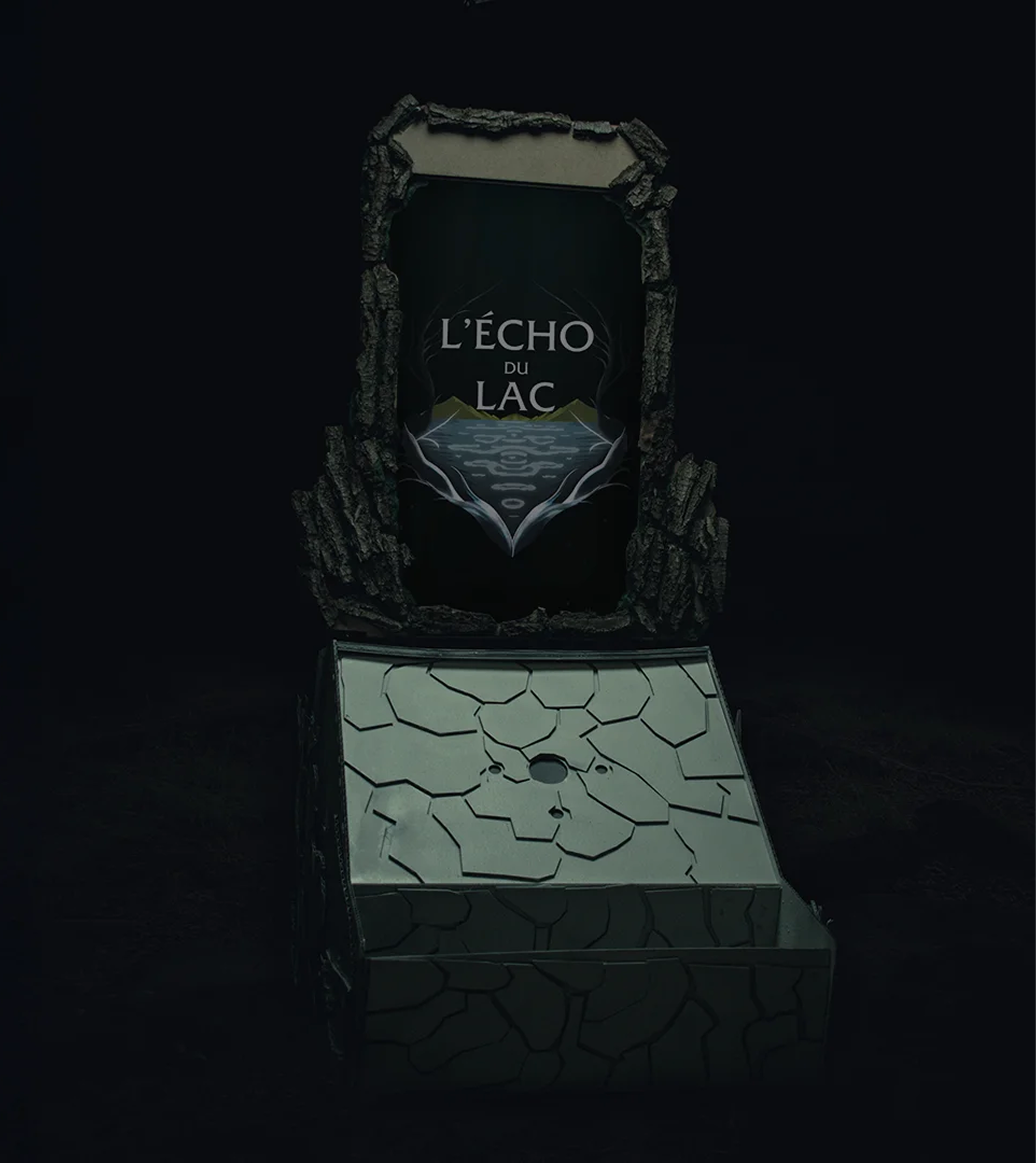
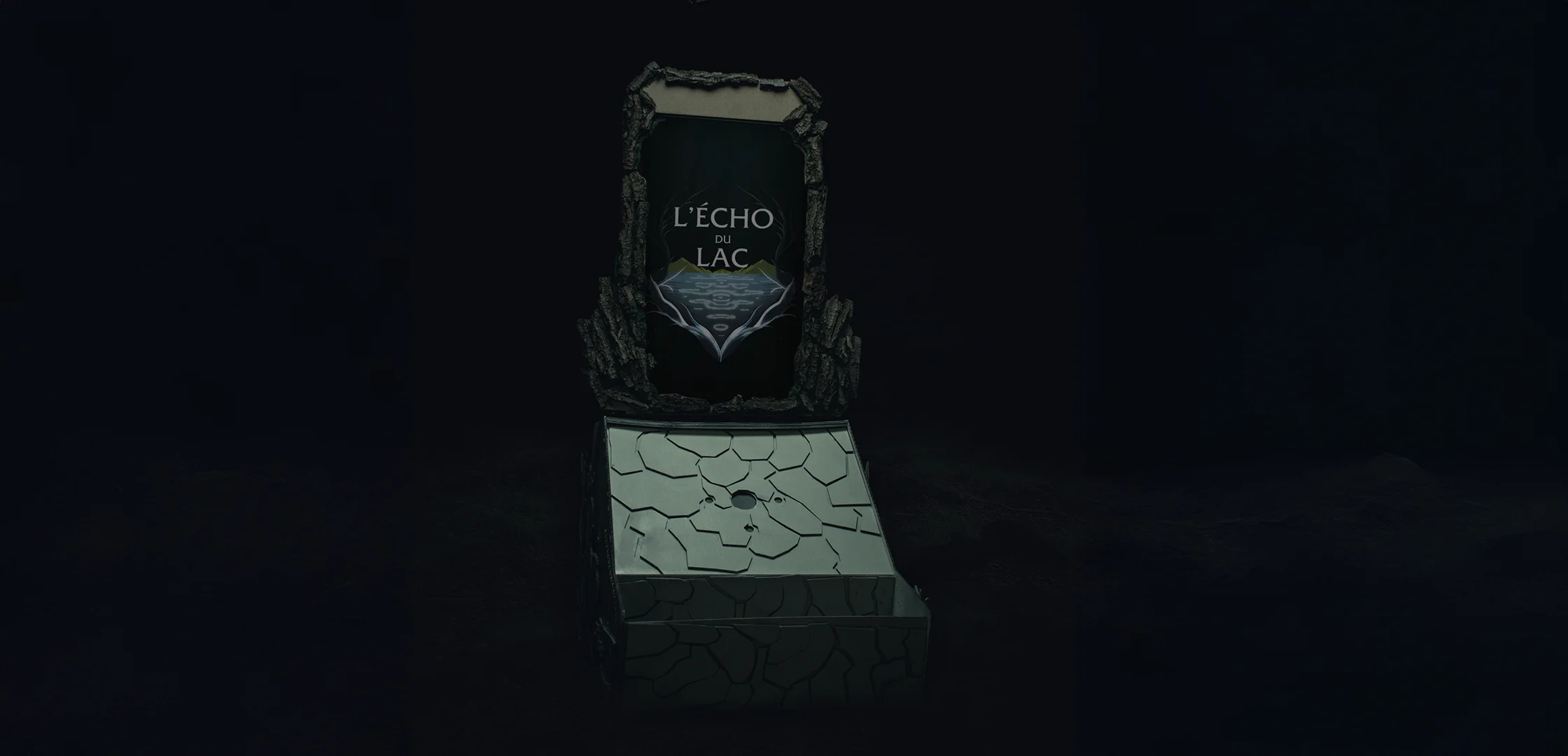
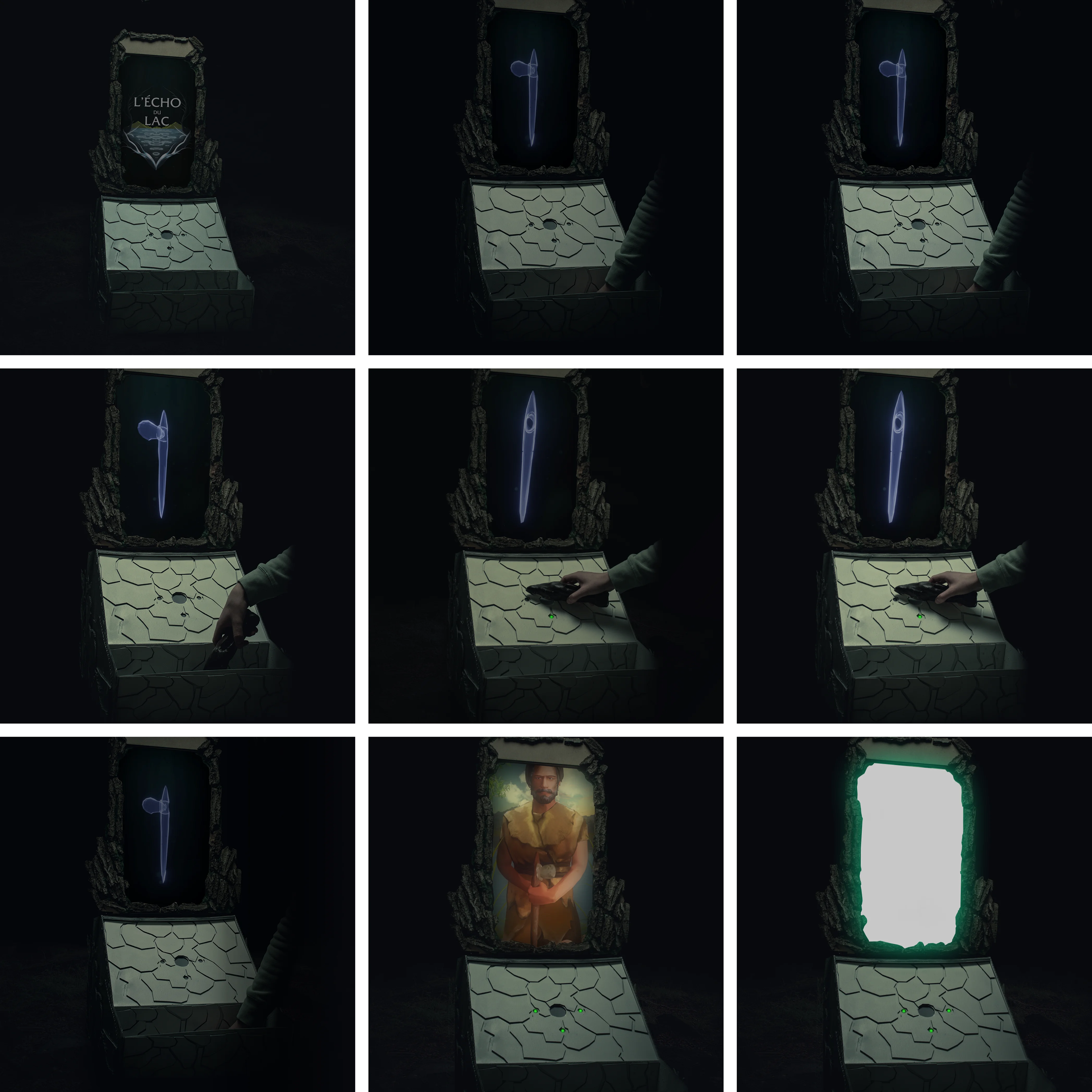
The Paladru Museum of Archaeology commissioned me to design a mediation device. In response, I created "The Echo of the Lake," an immersive solution that semantically puts into practice the principles of archaeological excavation. The device also allows visitors to immerse themselves in the history of the bathers of Lake Paladru, dating back to the Neolithic period.
*Prototype
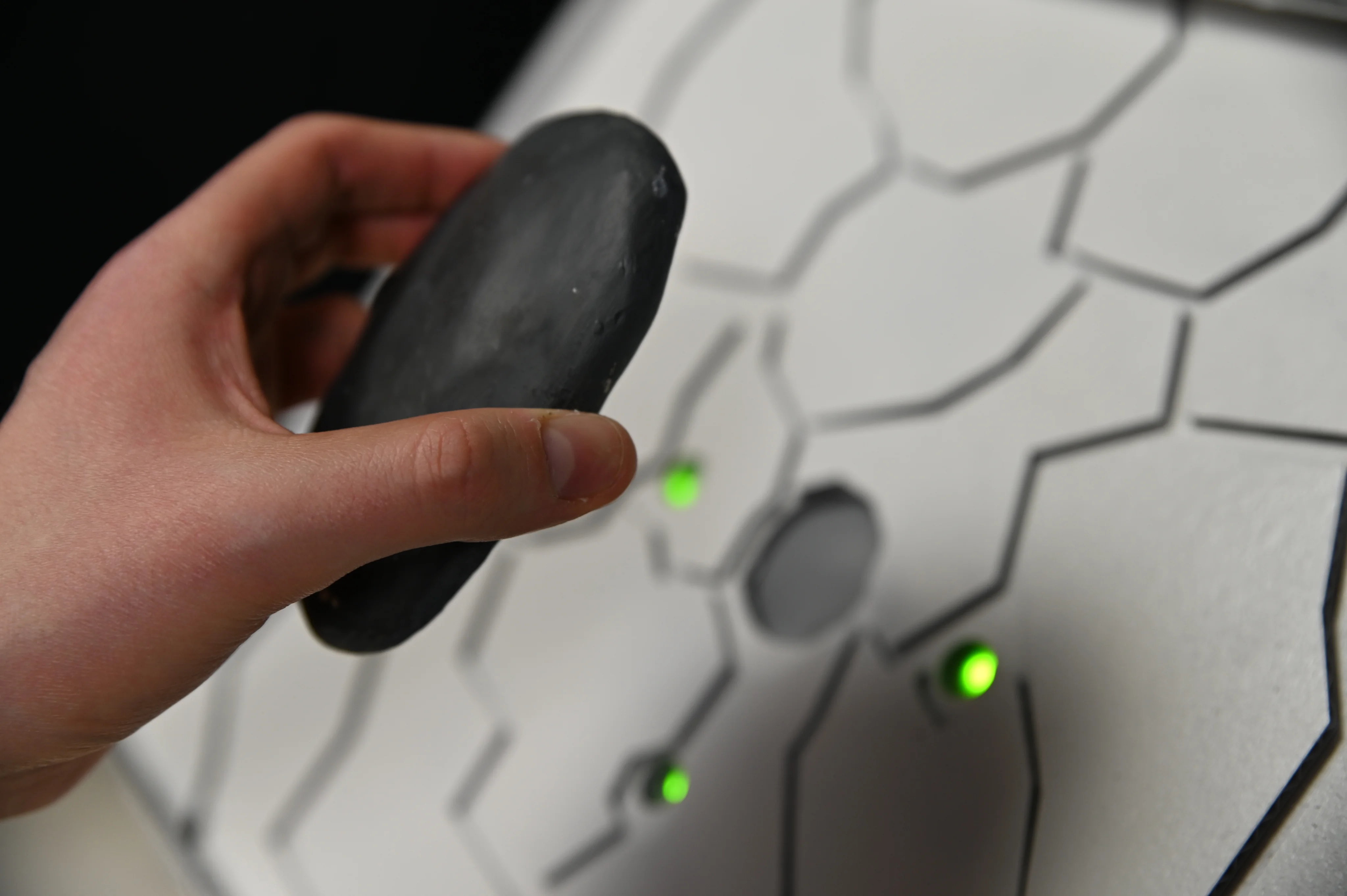
The "Echo of the Lake" device aims to reconstruct archaeological artifacts by gathering fragments scattered throughout a basin filled with lacustrine chalk. Once the pieces are assembled, the object is restored to its original form and releases the bather of Lake Paladru. The bather then converses with the visitor to provide a cultural contribution.
During my inquiry, I studied the problems encountered by a market gardener, particularly in the use of his greenhouse. Through field research, I was able to identify several issues, notably the limited measurement of the greenhouse environment, which also required significant analysis time.
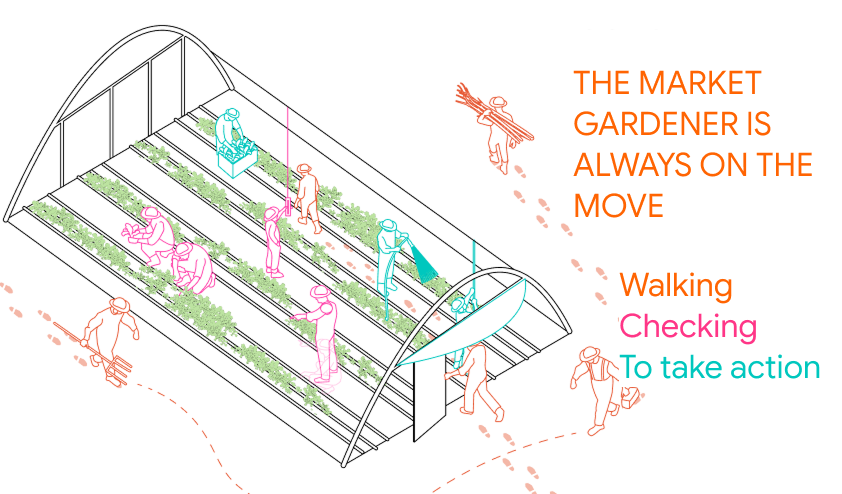
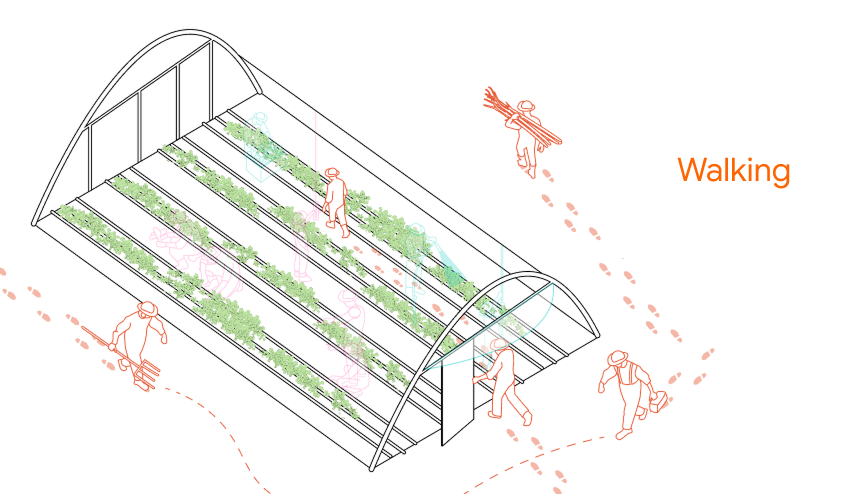
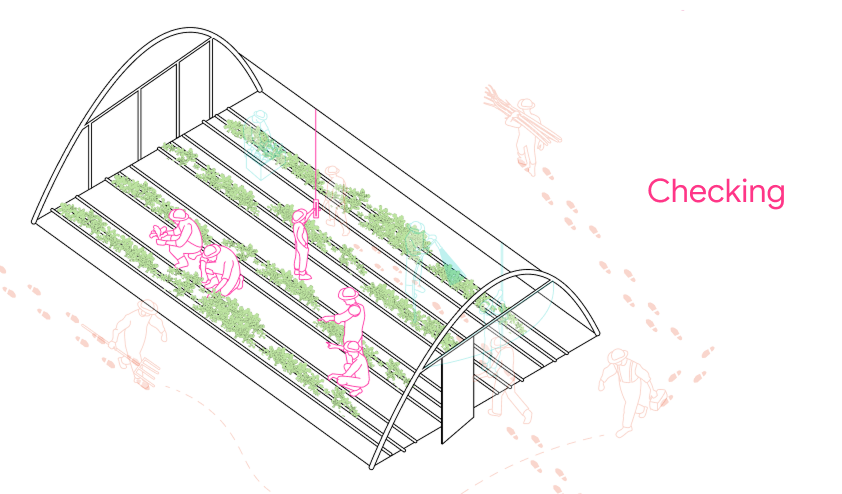
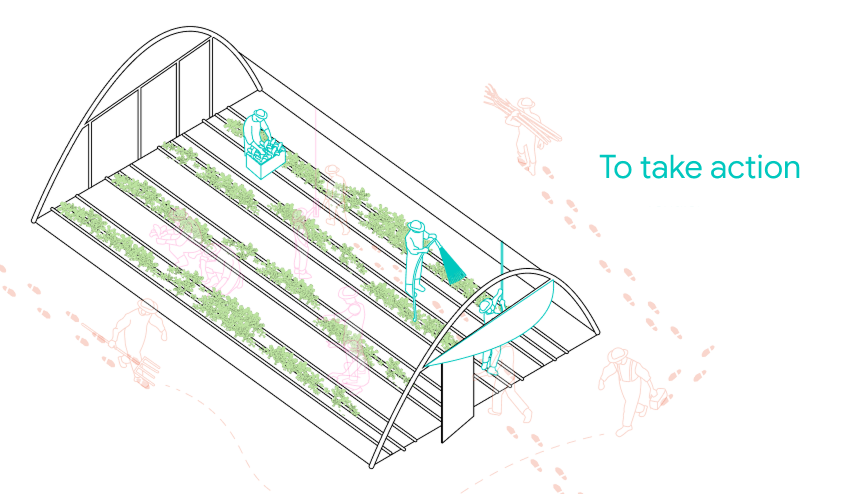
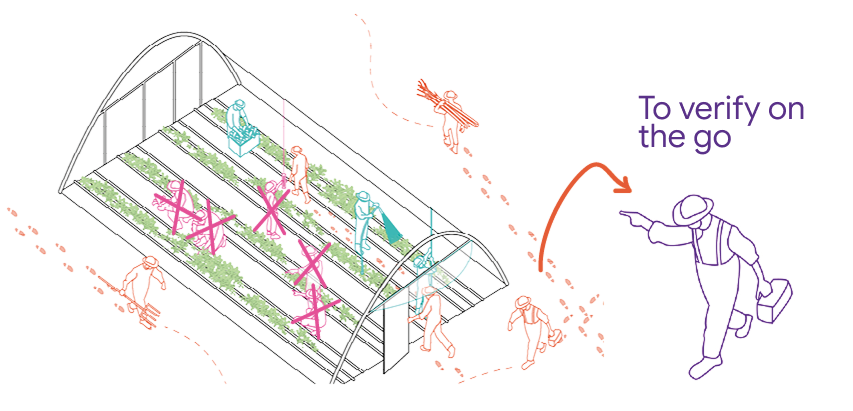
Faced with this observation, I designed a signage system to check the greenhouse's status from a distance. This project also invites us to question techno-solutionism: do we really need a phone or a screen to collect and interpret data?
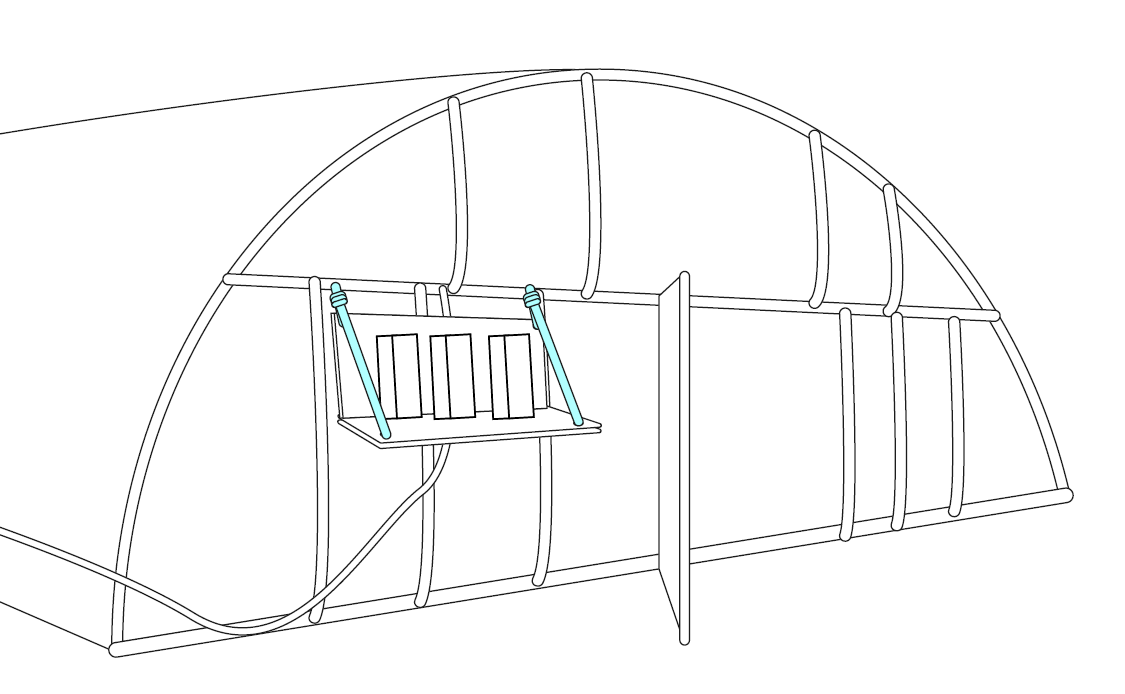
Thanks to a stepper motor, the mechanism rotates the different faces of a parallelepiped.
Each face carries a symbol representing a specific data point. When one of the faces is positioned perpendicular to the greenhouse and therefore oriented toward it, that data is brought to the foreground.
Through this device, the market gardener can now verify the condition of the greenhouse while walking, carrying out tasks that require movement, and at the same time glance at the greenhouse in a single look.
The Turn is a research object designed to question whether the market gardener needs a notifier such as a phone to receive data, a notifier that disrupts the routine of a market gardener. With this object, this signage, the market gardener is made aware of the state of the greenhouse in an ambient way.
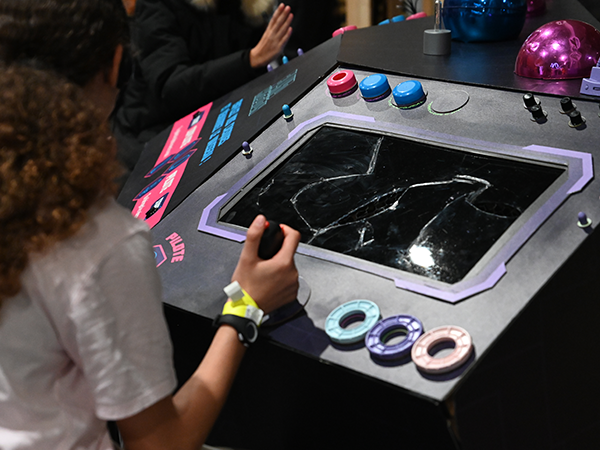
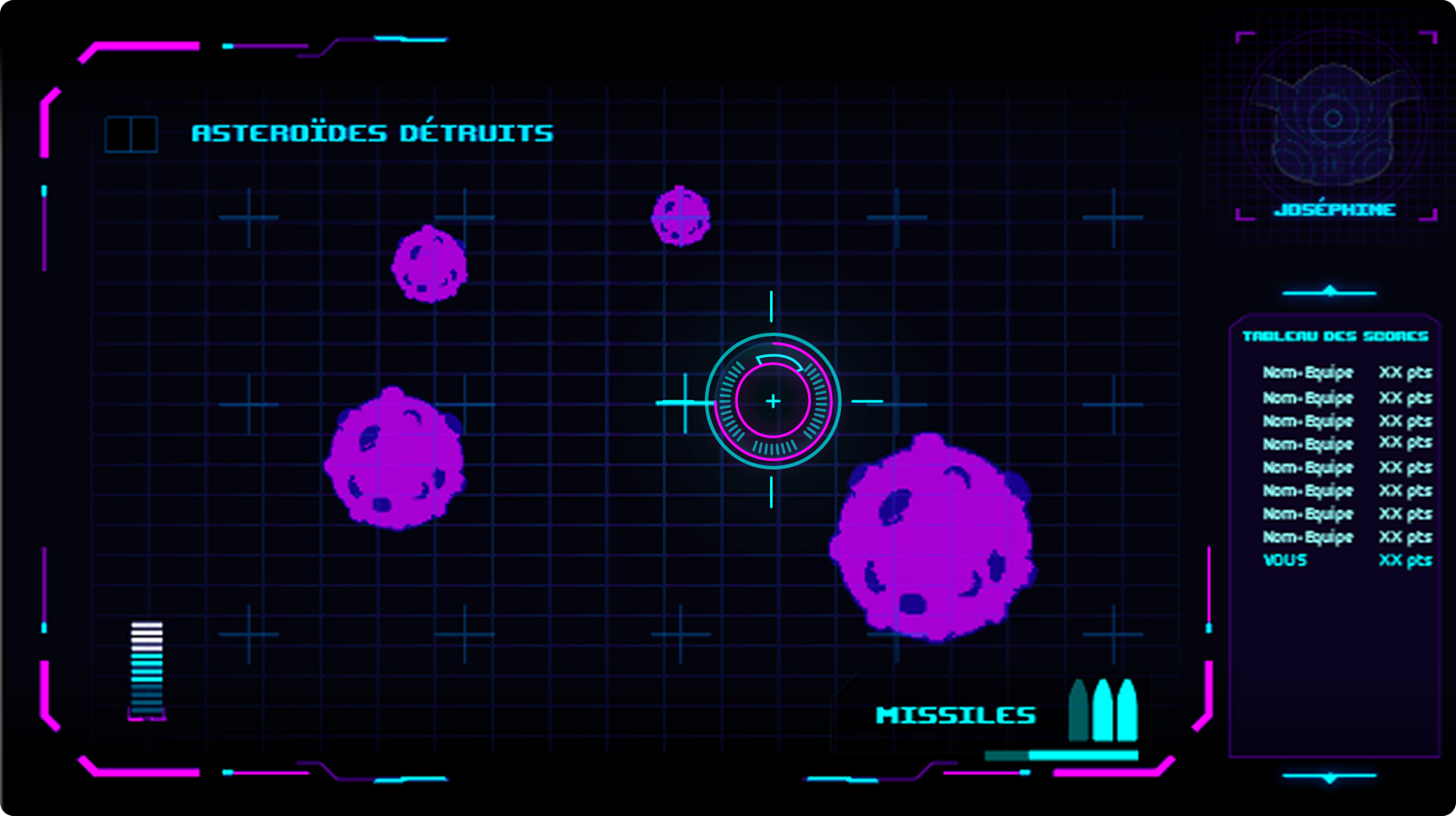
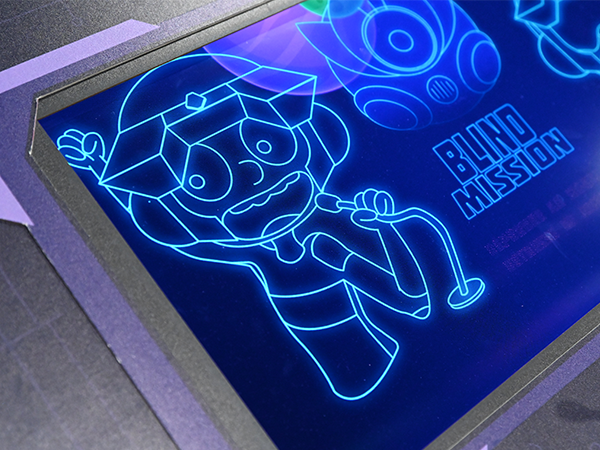
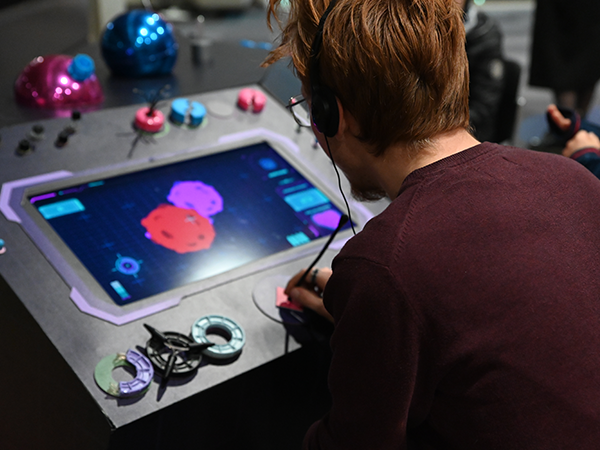
I took part in the Super Demain 2022 event in Lyon, a digital event dedicated to digital education. I had the opportunity to design an immersive game in which players had to cooperate to prevent the destruction of the spacecraft by destroying asteroids. The ship's pilot had to aim at the asteroids, while the co-pilot had to identify them. This playful experience was appreciated by a wide audience, from children to adults, for its fun and participatory dimension.
I designed the game's aesthetic and its diegesis, drawing inspiration from archetypal space shooter arcade games and spacecraft imagery. I also created the motion design, the full set of visual assets, and the soundtrack, composed using an old vintage MIDI controller, to reinforce the retro-futuristic identity of the experience. This project was carried out in collaboration with an interdisciplinary team made up of a developer and an object designer.
Oscar Pillu is a French design researcher and interaction designer exploring the intersections of design, computing, and play. He develops experimental interactions that bridge academic research and creative practice, combining digital technologies, physical prototyping, and playful forms of exploration.
His work investigates how interactive systems can shape attention, memory, and embodied experiences. Moving between research, hands-on experimentation, and artistic mediation, he creates tangible and engaging experiences that invite people to explore, interact, and discover new possibilities.
Live coding and generative music. Creating music with Strudel by experimenting with code, rhythms and unexpected sound combinations.
Arduino and physical computing. Building interactive objects with sensors, electronics and microcontrollers.
Electronic music production. Composing electronic music and experimenting with sound design in Ableton Live.
3D modeling and 3D printing. Designing objects in Blender and turning digital models into physical prototypes.
Experimental play and interactive objects. Exploring unusual mechanisms and playful interactions between physical objects and digital technologies.
He gained hands-on research experience at LISN (Laboratoire Interdisciplinaire des Sciences du Numérique), where he worked alongside Michel Beaudouin-Lafon on Human-Computer Interaction and technological innovation.
His background is grounded in a maker culture and continuous technological monitoring, which has shaped his ability to move between theory, design, and implementation.
He is particularly interested in methods that connect critical thinking to prototyping, especially when working on interfaces, interactive systems, and research-driven design projects.
He designs interactive systems and digital experiences with a strong research mindset, from concept exploration to implementation and evaluation.
His skill set spans HCI, UX/UI design, prototyping, creative coding, interactive installations, and applied research for emerging technologies.
He is especially relevant for teams working on innovation, experimentation, design research, or interdisciplinary projects that combine engineering, art, and user experience.
Oscar Pillu is a design researcher and interaction designer working across HCI, UX/UI, creative technology, and experimentation.
He has contributed to research and design projects in academic and applied contexts, with a portfolio spanning interactive prototypes, research-driven installations, and systems exploring memory, attention, and digital culture.
His work is characterised by a hybrid approach: rigorous inquiry, technical experimentation, and a sensitivity to lived experience.
For all inquiries, write to oscarpillupro@gmail.com in English or French
Elsewhere: LinkedIn, Instagram, Discord (le_oscar)
For those who know me well, enter my date of birth and you'll get my phone number in return